 English
 Tiếng Việt
 繁体中文
繁体中文
 TEL:+8613961146369
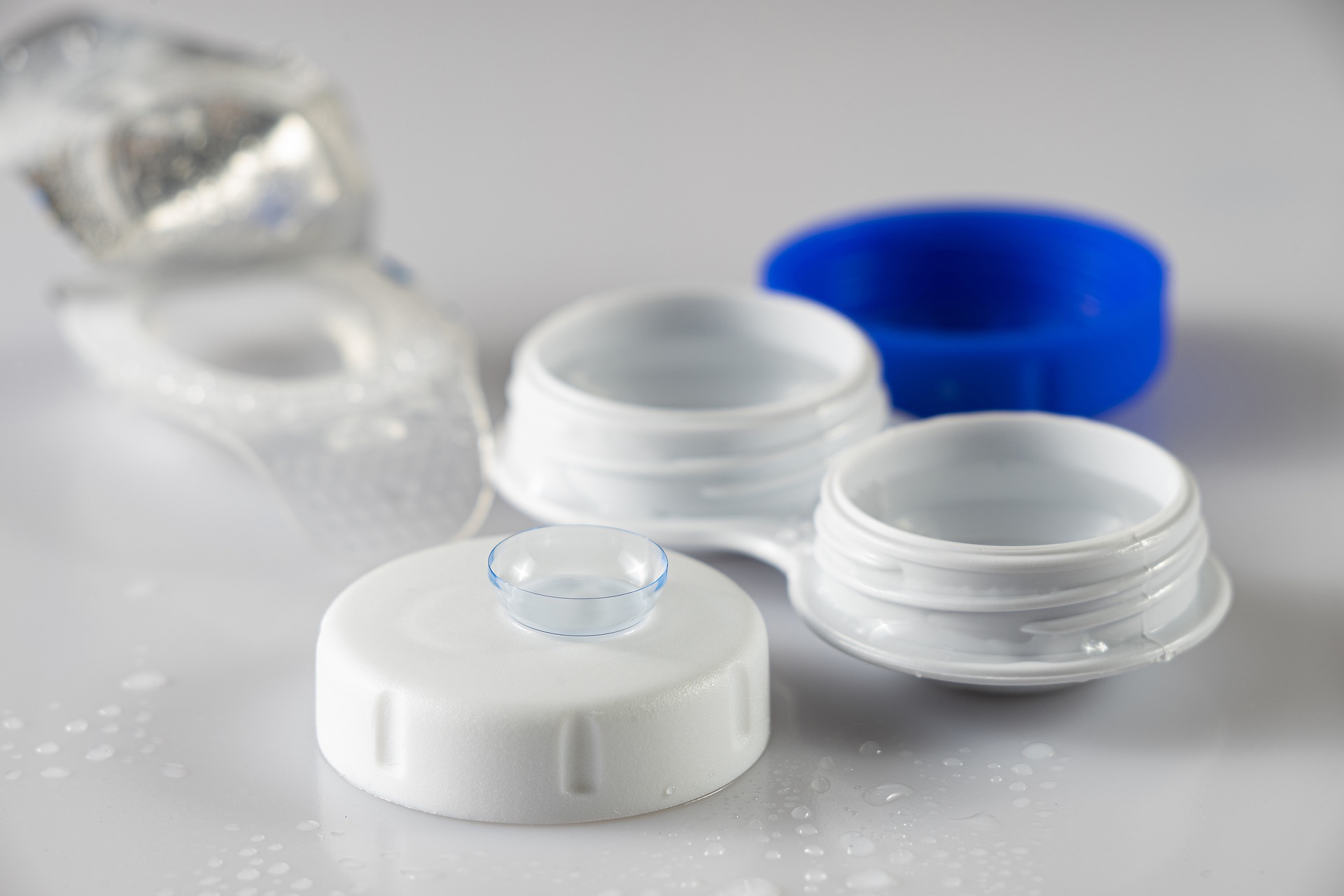
Contact lenses have been around for centuries, with the earliest known evidence of their use dating back to ancient Greece, where philosophers such as Hippocrates and Pliny the Elder wrote about the use of glass to correct vision. In the late 19th century, German glassblower F.E. Muller created the first successful glass contact lenses. However, it wasn’t until the 1930s that plastic contact lenses were developed, and they were first made available to the public in the 1950s.
How Do Contact Lenses Work
Contact lenses work by correcting vision through the use of a small, curved lens that sits directly on the eye’s surface. The lens is designed to refract light in a way that corrects the eye’s refractive error, which is what causes blurry vision. Contact lenses can be used to correct nearsightedness, farsightedness, astigmatism, and presbyopia.
What Are Contact Lenses Made of?
Contact lenses are made either out of glass (hard lenses) or silicone hydrogel (soft lenses). In both cases, they feature some level of oxygen permeability, which is an indispensable requirement for the wearer’s comfort. Glass lenses are not commonly used today, as they are less comfortable and less permeable to oxygen than silicone hydrogel lenses. There are also hybrid contact lenses made out of rigid gas-permeable plastic and featuring a peripheral fitting zone that is softer than the optical part, but these are generally rare. The hydrogel monomer resin is the most popular choice of the three, as the spectrum of applications for softer contact lenses is a lot wider. The most widely used method of manufacturing contact lenses is molding. The material is added in rotating molds and then shaped by centripetal forces or added and revolved at high speed to take its shape inside the rotating mold. After the lens gets its shape, the silicone hydrogel resin needs to be heat-cured in order to be polymerized. For this purpose, lab ovens need to be brought into play. The thermal curing cycles for the hydrogel may last for up to 34 hours, depending on the size and thickness of the contact lenses. Throughout this whole time period, the heating must remain uniform and within the specified stringent range. As this process takes place, sterilization is also happening as a side effect, which is crucial for contact lenses. The steps involved in the manufacturing of a contact lens are as follows: These are the basic steps involved in the manufacturing of a contact lens. Depending on the specific requirements of the lens, additional steps may be required, such as coloring, patterning, or the addition of other features. Contact lenses are very delicate products, and at the same time, they are supposed to attain very specific physical properties and optical characteristics. This calls for high levels of manufacturing precision, accuracy, and caution. As expected, for all these prerequisites, there’s an extensive list of special requirements that need to be met otherwise the lenses will have a defect. Here are the most important of these requirements: As contact lenses are medical devices, they are rigorously inspected for any faults that may render them unusable. The quality control is done via intense magnification to ensure that there are no irregularities at the microscopic level, while shadow graphing is also used to measure the curvature and diameter of the lens and make sure that it matches the manufacturing specifications. If all is found to be perfect, or at least within the range of the acceptable deviation tolerance, the lens is packaged in a glass or plastic vial and is filled with a saline solution which helps maintain the required moisture in the cured silicone material. Yes, contact lenses do expire. The expiration date is usually printed on the packaging, and it’s important to follow these guidelines to ensure that the lenses are safe to use. Expired lenses can become contaminated with bacteria or other harmful substances, which can cause eye infections or other problems. Additionally, the material of the lenses can break down over time, which can cause discomfort or other issues. It’s important to always use fresh, properly stored contact lenses.The Manufacturing Process of Contact Lenses
Contact Lens Manufacturing - Special Requirements
Quality Control
Do Contact Lenses Expire











